
The upgrade economy of Town Guardians: choices that compound
June 29, 2026
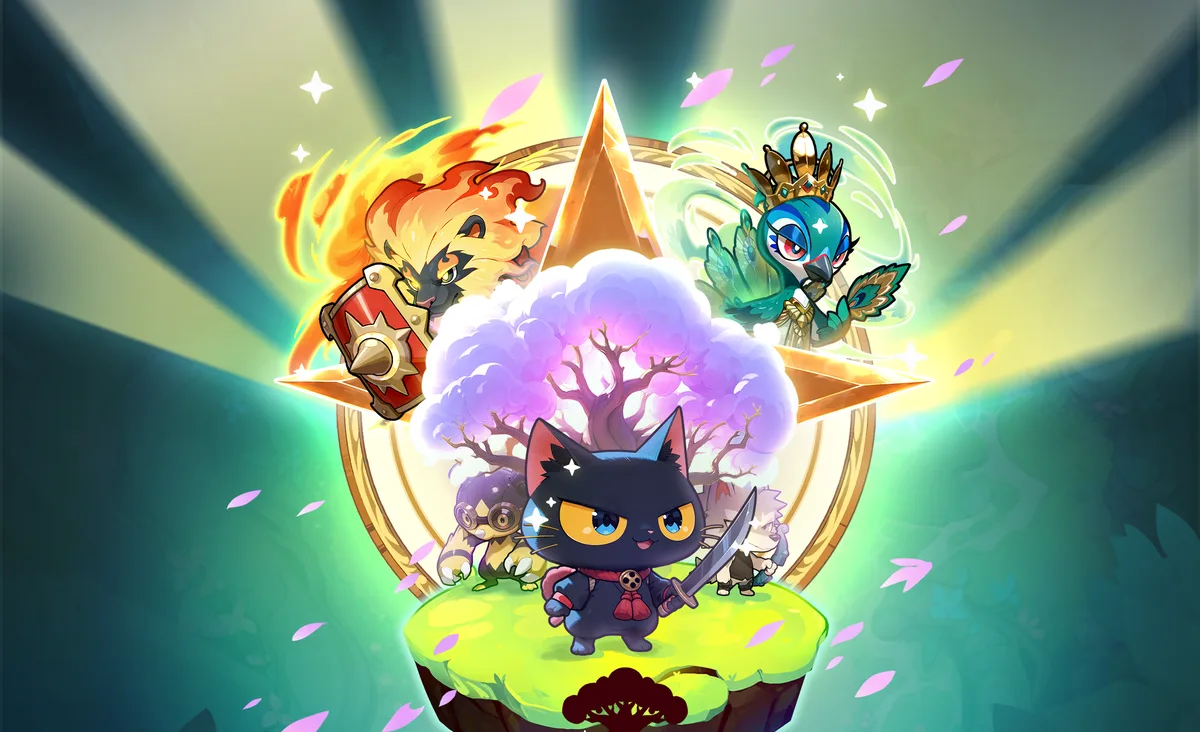
There’s a moment in a good roguelike run where you stop reacting and start steering. You’ve picked up enough upgrades that your board has a shape — a direction — and the next wave drop feels less like a lottery and more like a conversation with the game. That moment is what the upgrade economy in Town Guardians is designed around.
Every run is a negotiation
Each siege starts with a narrow hand: a few Successors, a modest set of options, and the Wall at your back. As waves clear, you earn upgrade offers — buffs, new Successor slots, passives that shift how your team breathes. The offers aren’t random noise. They’re weighted toward what’s already alive on your board, so the game is always nudging you deeper into something rather than scattering your attention.
The key tension is opportunity cost. An upgrade that strengthens Shadowfoot’s burst output is straightforward — she hits harder, things die faster. But the same pick means you didn’t take the option that would have let Hwaran’s support aura reach further down the line. Both paths are viable. Neither is obviously correct. The right answer depends on which enemies are coming, how far into the siege you are, and what you’ve already committed to.
That negotiation is the run. Not just the wall-or-collapse moment at the end, but every small fork along the way.
Successors as a build skeleton
The four launched Successors — Somteori, Hwaran, Shadowfoot, and Molt — were designed to create genuine synergy tension rather than a simple damage/support split.
Somteori and Hwaran are both supports, but they amplify different things. Leaning heavily into one often means the other’s value softens, which means your upgrade offers start mattering in that direction too. Meanwhile Shadowfoot and Molt both deal damage through different rhythms: one rewards you for setting up conditions; the other punishes you for ignoring momentum. Stack upgrades toward one and you’re quietly building an argument for how the run should feel.
What this means in practice is that a run with two dealers playing into the same upgrade track feels nothing like a run where you’ve invested in a support-heavy board that lets a single dealer carry enormous weight. The permutation space is already wide, and we’re building toward twenty-five or more Successors — so the combinations compound accordingly.
Keeping choices readable
Here’s where a lot of roguelikes quietly lose the idle-comfort layer: they pile on complexity until reading the board becomes work. We’ve been deliberate about resisting that.
Every upgrade offer should be understandable in under three seconds. If a player has to pause the auto-battle to decode what a choice actually does, we’ve failed on the comfort half of the design.
This means upgrade text is written to be scannable, not technically exhaustive. It also means we limit how many active variables a single wave can introduce. A drop that modifies Somteori should be legible against what Somteori is currently doing on screen — players can watch her work and then read the offer and feel the connection.
The idle layer is a promise: your board fights without you hovering over it. Break that promise and the roguelike variety starts to feel like stress rather than strategy. We want players making real decisions at natural pauses, then leaning back and watching the plan play out.
The loss teaches you something
When the Wall falls — and it will — the best outcome is that you understand why. Maybe you spread upgrade investment too thin and lacked the spike damage to clear the Corrupted Tree Spirit before it cascaded into the rest of the wave. Maybe you leaned too hard into one Successor and the Rotten Spore Mushroom’s slow attrition eroded a support layer you’d neglected. Maybe Unraveler Narak arrived and exposed the assumption your whole board was built on.
That’s the third design pillar: a loss should feel out-planned, never cheated. The upgrade economy is the thread that connects that principle to gameplay — because if your choices compounded into something coherent and you still lost, the game has something to say. If your choices felt random and you lost, the game just feels unfair.
We’re still tuning the weights, pacing, and offer pools. But the shape of the system — a run that starts narrow, builds toward a coherent direction, and collapses or succeeds based on how well you read the negotiation — is solid. We’re proud of what it feels like when it clicks.
If you want to follow along as we get closer to launch, keep an eye on the game section.
Want to know the moment our next game is playable? Get launch updates →